

FRFI republishes below an interview first published by the Popular Front for the Liberation of Palestine (PFLP) in al-Hadaf magazine, Volume 83, Issue 1557, May 2026
A continuing conversation between the sword, the neck and the string. Al-Hadaf interviews internationalist researcher and musician Louis Brehony
From the platform established by the martyred comrade Ghassan Kanafani, and at a historical moment when Palestine is rewriting human history with blood, fire, and fierce resistance, al-Hadaf meets with comrade Dr Louis Brehony. An Irish researcher and musician, Brehony represents the natural extension of communist internationalism committed to the causes of national liberation in the Global South.
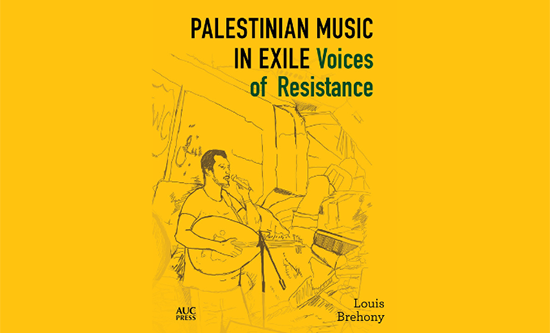
Our interview with him today coincides with his latest cultural and political output, including his joint publication with Dr Tahrir Hamdi of Ghassan Kanafani: Selected Political Writings, published by Pluto Press London, and following Brehony’s seminal historical and class-based work, Palestinian Music in Exile: Voices of Resistance. In this comprehensive interview, we discuss with comrade Brehony the dialectic of the string and the rifle, current projects of revolutionary solidarity, and the implications of the current geopolitical confrontation against the Zionist-imperialist alliance.
Al-Hadaf: Louis, welcome to the pages of al-Hadaf, the magazine that Kanafani considered a trench no less important than the trenches of the fedayeen. Based on this inseparable link between thought and action, what are your latest political, cultural, and literary projects? And how do you seek, through them, to develop tools of resistance within the heart of imperialist capitals?
Louis Brehony: Firstly, I must express my deep appreciation to al-Hadaf comrades for the honour of this discussion. As the journal founded by Ghassan Kanafani, Wadi’ Haddad and other outstanding thinkers in the Palestinian revolutionary struggle, the reputation of al-Hadaf precedes it, while the ongoing work of its editors and writers continue to provide a unique space to engaged voices within and beyond the PFLP. In this world of imperialist crisis, genocidal warfare, sanctions and the resistance of the oppressed, these tasks are arguably more important than ever before.
Contemporary questions of politics, culture and literature are, of course, inseparable from each other, a reality recognised by Ghassan and expressing in some part the influence of Lukacs on his work. The question of the totality of social development was a concern of both. Lukacs wrote that, “For every genuine Marxist there is always a reality more real and therefore more important than isolated facts and tendencies.” Fadl al-Nakib was among those who saw in Ghassan’s work the expression of a “total resistance,” combining a multiplicity of resistant methods in an impressive, multi-pronged collection of weaponry. Ghassan produced PFLP pamphlets, Marxist theoretical writings, cultural criticism, editorial content, lectures, novels, short stories, theatrical texts, satire, paintings, drawings, sculptures, posters and more beyond these, with his contribution and development of each being worthy of serious study in its own right.
I would have no illusions in my modest contribution ever reaching the peak scaled by Ghassan Kanafani, but my own work does, at least, operate on multiple planes. At first this happened accidentally. I grew up in an Irish family where musicians and poets had a profound influence on my becoming a performing musician and music scholar but, coming of age during British imperialism’s involvement in wars on Iraq – with Ireland, of course, remaining occupied militarily – it became increasingly impossible for me to separate culture and politics. While I became interested in the music of Palestine and the region, I got involved with the Revolutionary Communist Group (RCG) in Britain, and learned to think politically, to write and organise.
To fast forward a few decades, my projects now balance these influences. My main contribution politically is as a writer, with a focus on the Palestinian struggle, while sometimes writing on Lebanon, Syria and other regional developments. I can summarise some of the projects I am involved in currently. My first book was on the subject of Palestinian music, framed as an oral history, covering broad regions of Palestinian displacement and describing the styles, techniques and political concerns of musicians. This book is due for release in Arabic in 2027. I have a second book on Palestinian music in the pipeline, this time giving more of a historic overview and narrating the development of music from before the 1948 Nakba up to al-Aqsa Flood. We hear, for example, about early musical revolutionaries including Nuh Ibrahim and Nimr Nasser al-Yaffawi, about the musical expression of historic intifadas, and discuss the enduring role of music, from the displacement camps of Gaza to world solidarity stages.
Having co-edited Ghassan Kanafani: Selected Political Writings, I have maintained an interest in the study of his broad contribution. When we produced this book, co-editor Dr Tahrir Hamdi and I were convinced that a field of “Kanafani studies” should be liberated from the narrow, misconceived ways through which much of Ghassan’s work is framed in Western academia, where he is delinked from the PFLP and revolutionary Marxism. I am currently gathering research on Ghassan’s two trips to China and on his contribution to the Filastin supplement of al-Muharrir newspaper. Adding to his long list of talents, in one text I plan to playfully suggest that Ghassan was a musician! Of course this is strictly untrue, but Fairuz appears in his work and so too do the ‘ataaba melodies of Palestinian fellahin. He was also known to dance dabke.
Alongside these written contributions, I continue to study the maqam tradition in all of its historic depth, exploring historic repertoires through the buzuq, an instrument with ties within and beyond Bilad al-Sham. In the Gazelleband project, I perform alongside Gazan oud player Reem Anbar, who has really pushed my development as a musician. Reem is a total inspiration and recently gave music workshops to young children in the camps of Lebanon. Our work together tells the Palestinian story onstage in new ways, blending tradition with an ongoing struggle to make the narrative heard.
Al-Hadaf: In your introduction to Kanafani’s Selected Political Writings political writings, you emphasise that the struggle is “a confrontation between imperialism and an anti-imperialist liberation movement against a brutal settler-colonial occupation.” In light of the ongoing epic of resistance and genocide in Gaza, how does this class analysis dismantle the attempts by the Arab bourgeoisie and global liberalism to depoliticize the conflict and reduce it to abstract humanitarian and relief issues?
LB: This is an important point, and I think that the broader class content surrounding the confrontation in Gaza was expressed succinctly by Georges Ibrahim Abdallah upon his release from a French imperialist jail in 2025. Using Egypt as his example, Abdallah was at pains to point out that the genocide on Gaza would be impossible if the revolutionary potential of the masses was realised and mobilised on the side of the Palestinian people. A Lebanese communist, Abdallah was speaking, of course, from Beirut upon his return, arguably voicing the perspective of the most advanced and conscious section of the regional left; he also showed eloquently that current and freed political prisoners continually play a vanguard role, politically.
But I can only answer this question from the standpoint of being a communist in Britain, the country most responsible for the crisis faced by the Palestinian masses over the last century and more. British imperialism gave backing to the Zionist project and without such backing, the ideas of Herzl and others would have remained in the realm of ideas. In his essay “Resistance is the Essance,” Kanafani pointed out that the greatest betrayal of the Palestinian people came with the brutal suppression of their revolutionary movement in 1936-39 by Britain and its Zionist paramilitary proteges, where the counterinsurgency techniques applied in Ireland and India were used to brutalise another indigenous population. Britain supported Zionism as a “loyal little Jewish Ulster” – a bulwark against Arab revolution and independence and, though the USA has supplanted Britain as the world’s dominant power, this position of the British ruling class has remained, with the Labour Party playing a particularly poisonous role historically, and now in government.
The question of solidarity in Britain is intrinsically tied to this history of British imperialist intervention. Where Georges Abdallah is scathing in the failure of millions living under Arab reactionary regimes to rise up on the side of Gaza, I would say that the masses in Britain have a historic responsibility to build genuine solidarity. At certain points during the genocide since 7 October 2023, we have seen youth anger against the Labour government threaten to spill into a more powerful movement. But opportunist elements in the official pro-Palestine movement have sought to quell this rebellion, continually hosting Labour MPs and on their platforms and isolating the struggles of Palestine Action, the SOAS2 and others facing state repression. The government threatens to ban words like “intifada,” and the organisers of big London marches act as police to carry out the silencing! How do we combat liberalism in this context? In my view, answers must be found through constant revolutionary engagement with those in the Palestinian movement who are fighting back, and in fighting for our own right to back the resistance. Amidst growing racism and a cost of living crisis, it is the role of revolutionaries to show the working class that the way forward is internationalism and socialism.
Al-Hadaf: In the literature of the Popular Front, particularly in the “Tasks of the New Phase” (1972), authored by Kanafani, Gaza was described as the place where the vanguard proved its ability to wage an “effective people’s war.” As a musician who has documented the culture of resistance, how do you see the relationship between the committed song and the rifle, for example the songs of Abu Arab and of the bands al-Ashiqeen and Kofia? Is revolutionary melody merely an echo of the resistance, or is it a mobilisiation tool for the “people’s war”?
LB: There is no moment in Palestinian history that has not found itself reflected in music, and the struggles since the British occupation of 1917, through the Nakba, Naksa, intifadas and war and resistance of today all find their representation in song and music. When Ghassan Kanafani visited Gaza in 1966, he saw its atmosphere of violent colonial repression and fierce resistance and mentioned it frequently in his writings in the years to come. By 1972, the musical revolution which accompanied the re-emergence of the armed liberation struggle was in full swing. Palestinian music was sung everywhere there were Palestinians and nearly all the songs of this period were directly or indirectly geared towards fighting for a victory against Zionist colonialism.
Just as Kanafani and the Popular Front saw in Gaza the heroism and vanguardism of an impoverished colonised enclave, the position of Gaza in Palestinian consciousness and popular culture found some prominence. Mahmoud Darwish wrote of Gaza’s “different values” and, coming from Shefa ‘Amr in the north, musician Shafiq Kabha came to Gaza every year in the 1980s, singing to enthusiastic and lively crowds who lapped up his patriotic anthems. Those who grew up in Gaza during this period remember a burgeoning trade in revolutionary cassette tapes, and listened to al-Ashiqeen, Marcel Khalife, Sheikh Imam, George Kirmiz, Abu Arab and others who sang with a clearly revolutionary message.
We must remember, however, that at this point – in the years before the intifada of the stones in 1987 – al-Quds was the centre of youth musicianship, and many flocked to the city to join bands or simply hear them perform. When the mixed male and female vocalists, musicians and dancers of the al-Funoun al-Sha’biyya band took to Jerusalem stages in summer 1987, they presented music they had excavated from the memories of older Palestinians and those displaced in the Nakba. Calling out to the revolutionaries, they sang “al-Quds tishra’”, “Ouf Mash’al” and other traditional songs, using oud, buzuq and traditional percussion. Other bands used worldly influences and young singers like Kamilya Jubran and Reem Talhami joined the bands Sabreen and Washem, utilising subtle poeticism and Arab classical influences.
Others were totally direct, despite the fierce repression in al-Quds and the rest of occupied Palestine. Songwriter Walid Abdisalam cited the armed movement in Lebanon as an inspiration but did not merely echo it. In his famous song “Nzilna ‘al-Shawarya’”, he sang of “the people’s war, the path to victory.” We can assess the influence of such songs by their endurance – Abdisalam’s anthem was sang again in Haifa and Ramallah during the street protests of the Unity Intifada in 2021. But music’s historic ties go even further back. During the al-Aqsa Intifada, Gaza-based band al-Dawaween sang “Hiz al-Rimh,” a song of the 1936-39 revolution, quoted in Kanafani’s book on the subject. During al-Aqsa Flood, “Mawtini” again became a popular anthem, in Gaza, Lebanon and internationally – I have heard it sung in Ireland and New York. Actually, “Mawtini” may be a case study in how the principles of revolutionary anticolonial struggle are maintained by the masses. The Palestinian Authority’s “Fida’i” has nothing like this kind of popularity. Where there is resistance, there will always be resistance music.
Al-Hadaf: Comrade Louis, you come from an Irish background and are familiar with the Irish legacy of struggle against British colonialism. How does the Irish experience of resistance and dismantling colonial structures intersect with the Palestinian cause? And what message does the radical Irish left today have for the resistance forces in Palestine?
LB: Historically, the Irish and Palestinian struggles against imperialism intersect at many junctures and shared experiences. I have already alluded to the fact that British occupation forces during the “Mandate” period were sent to Palestine having already been involved in brutality in Britain’s oldest colony, Ireland. This included the sending of over 750 of the notorious Black and Tans – colonial police named after their uniforms – who arrived in Haifa in 1922. British imperialism dealt with Palestinian revolutionaries the same way they had dealt with the leaders of the Irish rising in 1916. Ben Gvir’s noose lapels today and Zionist baying for the blood of Palestinian prisoners finds echoes in both the executions of 16 Irish revolutionaries including James Connolly and Patrick Pearse, and with the hanging of Atta al-Zeer, Fouad Hijazi, Muhammad Jamjoum and dozens of Palestinian revolutionaries from 1929 onwards.
From these earlier periods of anti-imperialist struggle, we find similarities in resistance culture too. Irish and Palestinian musicians were among those killed by the British – we could mention Irish pipe player Éamonn Ceannt and Palestine’s rebel songwriter Nuh Ibrahim. The themes of the music were similar too, backing the resistance and hailing the green beauty of the land, and often mocking the occupying forces. In recent decades, resistance and music have gone hand by hand behind the prison doors of both occupations. In the Palestinian case, there are many examples of musicianship among the steadfast ones in the Zionist prisons, from the composing of prison songs like Salah Abd al-Ruba’s “Ya Naqab Kuni Irada,” to the singing of Sheikh Imam songs, as remembered by Wissam Rafeedie. In British-occupied Ireland, prisoners made harps from scrap wood and well-known fighters like Bobby Sands wrote songs of rebellion. In Gilboa prison, Palestinian inmates got together to make an oud, led by Golan-born musician Fida’ al-Sha’er. Instruments are clearly important! At a time when Zionist musicians attempt to claim the oud as their own through festivals on stolen land, hearing the oud in the hands of Palestinians in Gaza and around the world represents a threat to their colonial mission.
For many reasons, the Irish left is beset by crisis and the liberation movement is at a low ebb – we have, of course, witnessed our own “Oslo” and the betrayal of the cause of liberation by a bourgeois trend seeking negotiations, not true liberation. The opportunism of the dominant sections of the British left and their tutelage to the imperialist Labour Party share a fundamental share of the blame for the current state of things. But, among small but principled sections of the Irish left movement, Palestine is held up as the great example of a people refusing to submit to colonialist warfare. Whenever I am in Ireland, it feels like the Palestinian cause is almost universally admired. There are limits to the level of solidarity at the moment but building a more effective and enduring solidarity between the two would, I suggest, come with striking at the British roots of the national crisis suffered by both peoples.
Al-Hadaf: We are witnessing a revolutionary resurgence of resistance slogans in the Western street, and have seen how the Swedish song of Kofia, “Leve Palestina” (calling for the destruction of Zionism) has risen to become an anthem of global protests despite official bans. How can the revolutionary left transform this spontaneous, seasonal mobilisation in the West into an organised international front that openly supports armed struggle and severs the economic and military arteries of the Zionist entity?
LB: As well as having national significance as carriers of consciousness and cultural vitality, Palestinian songs have also sparked international confrontations between progressives and the forces of reaction. Composed by Kofia band songwriter George Totari from Nazareth, Swedish-language “Leve Palestina” (Tahiyya Filastin) was first sung on solidarity demonstrations in the early 1970s. Strange then, that the social democratic politicians governing Sweden would then seek to ban the song in 2019 – its anti-Zionist lyrics were totally unacceptable to them. But what has happened since this attempted censorship? The song has been sung by tens of thousands mobilising on demonstrations in Sweden, while Kofia have enjoyed renewed popularity. I produced the film Kofia: A Revolution Through Music and was surprised by the enthusiastic response, with screenings organised by activists and film-lovers in around a dozen countries.
The example of Leve Palestina does point to the potential of music to be freed of its apolitical tendencies in a world dominated by consumerism and big music corporations. At the same time, its adoption by a broad, militant section of the solidarity movement offers pointers for how we fight the drive to silence voices that are explicitly anti-Zionism and pro-resistance. During the South Africa apartheid boycotts, activists targeted national sporting teams and other cultural representatives. Actually, Ireland is one of the leading examples where progressives are now calling to isolate the Zionist entity. Ireland boycotted the Eurovision song contest but the fact that the national football team are due to face Israel shows that this battle is by no means won. The boycott movement clearly needs to be deepened. To do this in Britain would involve breaking free of the confines set by the pro-Labour Party Palestine Solidarity Campaign, as well as the BDS national committee in Ramallah, which frequently distances itself with independent boycotts. Anti-imperialists must reject bourgeois respectability and dig in for the long fight.
Al-Hadaf: In a famous letter, Ghassan Kanafani wrote bitterly: “I feel more than ever that all the value of my words is a brazen and trivial compensation for the absence of weapons, and that they now pale before the rising of the real men who die every day for a cause I respect.” How do you, as an engaged intellectual and musician, interpret this dilemma Kanafani expressed between the word and the gun? And how do you view Kanafani’s own transformation after 1967, when he edited the newspaper all-Hadaf, a vanguard of the armed struggle, dedicating space to the operations of revolutionary fighters like “Guevara of Gaza,” Muhammad al-Aswad?
LB: In these lines – words he never intended for publication, we should add – Ghassan shows us his total lack of conceit and his self-effacing feelings of modesty. This towering figure who, as we have seen from Fadle al-Nakib’s description, represented a “total resistance,” with so many strings to his oud, if you forgive the expression, actually felt a sense of personal worthlessness. Ghassan’s admiration of these Palestinians in Gaza who were engaged in acts of armed resistance years before al-Karameh, the PFLP and what became known as the Palestinian Revolution actually shows that his “transformation” happened way before 1967. Al-Hadaf readers and supporters of the Front will know that al-Hakim George Habash revealed that the seeds of the PFLP were sown in discussions as early as 1964. At that time, Ghassan was an Arab Nationalist Movement activist and Filastin supplement editor. His activities as editor are revealing of the direction that this grouping were headed: under Ghassan’s watch they translated and published Che Guevara’s Guerrilla Warfare, and analysed the guerrilla movement in Vietnam. And Ghassan himself went to China in 1965, finding himself greatly impressed by the revolution.
This revolutionary becoming is found in Ghassan’s fictional works too. His most famous novel Men in the Sun has been interpreted in dozens of ways, but rarely are his own words on the subject drawn upon. Reflecting on the story in a 1970 interview with Mawaqif magazine, he said that, in the novel, “I called out in an extremely loud voice for resistance and violence.” Men in the Sun was released in 1963 – Ghassan was already therefore in the vanguard of demanding an armed Palestinian response! We therefore see the seeds of al-Hadaf and its focus on the armed struggle after 1969 in this earlier period. When Ghassan wrote the PFLP pamphlet “The Resistance and its Challenges” in 1970, he condensed all of this learning and said clearly that Marxism-Leninism was the only methodology capable of driving the struggle forwards. Ghassan and his comrades had come full circle.
Al-Hadaf: Returning to your book on exile music, you mention that Yafa and al-Quds (Jerusalem) were before 1948 urban centres of regional cultural exchange, and that musicians like Nuh Ibrahim, Ruhi al-Khamash, and Salvador Arnita emerged through the Palestinian Broadcasting Station. How did the Nakba and forced displacement topographically and culturally affect these musicians? And how did their productions in their new places of exile mark a transformation from traditional music and classical pieces into explicit instruments of national and political identity?
LB: We find in pre-Nakba Palestine living, developing and regionally collective approaches to musical culture, totally exploding the Zionist myth that Palestine was barren and empty. By the late Ottoman period, al-Quds, Yafa and Haifa were among the cities where urban musicians gathered, either informally in working class cafes or, increasingly, in bigger theatres. In the decades before the Nakba, well known Arab vocalists like Umm Kulthum and Mohammed Abdel Wahab performed to enthusiastic audiences – Umm Kulthum visited at least four times, and her concerts were hugely successful. Instrumentalists like violinist Sami al-Shawwa and buzuq player Mohammed Abdel Karim came and worked in Palestine, with the latter becoming part of the al-Quds radio ensemble.
Remaining with urban music for the moment, the dominant trend was for Arab classical music, including Ottoman-influenced instrumental pieces, muwashshahat, qasa’id and, from the 1920s, taqtuqas and newer song forms. The earliest recordings of Palestinian musicians, including al-Sheikh Ahmad al-Sheikh, Rajab al-Akhal and Thurayya Qaddura, were based around classical poetry, recorded in Damascus or Cairo and even singing in Egyptian accents! We can see clearly that maqam-based tarab musics were flourishing in Palestine before the violent British-backed colonisation that resulted in the Nakba, which totally disrupted the development of Palestinian music, as well as massacring its people and scattering them to the wind. Recordings and musical artefacts from this period were looted by the Zionists, with much lying hidden to this day in the archives of the coloniser.
I have spoken about the situation in urban music but Palestine was an overwhelmingly rural country, where most of the people were fellahin [peasants/agricultural labourers – FRFI ed.]. It follows therefore that the largest share of music-making was based on the land, with songs and music dedicated to harvests, shepherding, fishing and other work-based activities on the land of Palestine. The dabka, sahja and other popular dances find origins in the physical movements of the regional peasantry, while the earliest musical instruments found by archaeologists in Palestine are shepherds’ flutes made of bone or branch, and dating back over 12,000 years. Prior to the Nakba, music was a key component of celebrations, and there were songs for births, weddings, deaths and religious events, among others. The archetypal poet-singer, the zajjal, played an important role as the master of ceremonies, and improvised lyrics based on the occasion or the events surrounding the particular moment in history.
I feel it is necessary to give this history in order to describe the first moments in anti-colonial music-making among Palestinians, showing the social and historic origins of the aesthetic modes used by the performers. The writer of many epochal songs against the British occupation and Zionist colonisation, Nuh Ibrahim had a background in both the rural and urban musics of Palestine. A zajjal who also sang tarab in the 1920s, some of his political songs of the revolutionary decade to come resembled the taqtuqas of Cairo, including satire akin to the compositions of Egyptians Sayyid Darwish and Zakariyya Ahmad. But just as the 1936-39 revolution would be the regional vanguard of anti-imperialist struggle, the music of Palestine during this period was revolutionary. Ibrahim channelled these influences and created music that was both revolutionary in poetic content and artistically grounded in maqam. His contemporary Nimr Naser had sung the same romantic qasa’id as Umm Kulthum in the mid-20s but recorded anti-Zionist music during the revolution, while still using qanoun, oud and regional melodies. The resistance music of later periods was stylistically varied but many musicians remained committed to this grounding in Palestinian and Arab tradition.
Al-Hadaf: In your historical analysis, you focus on the role of musical broadcasting and the reshaping of folklore after the Nakba, highlighting Palestinian producer Sabri al-Sharif’s role in Beirut and the influence of his approach on the music of the Rahbani brothers and Fairuz. From the perspective of deconstructing colonial structures, how did this “orchestral arrangement and harmony” of authentic folklore contribute to preserving the collective memory of Palestinians in the diaspora and thwarting Zionist plans of erasure?
LB: This is a really interesting question. With Palestinians facing mass displacement, impoverishment and uncertainty after 1948, and with the rise of Nasser and pan-Arabism inspiring many beyond Egypt, Palestine became a motif of anti-imperialism in new forms of music. Abdel Wahab, Abdel Halim Hafiz, Sabah and Umm Kulthum were among those who sang for Palestine, sometimes in militant ways. It could be said that the adoption of Western orchestral instruments and a flattening out of certain Arab characteristics constituted a contradiction in some of these examples – could the “greater [Arab] nation” (al-Watan al-Akbar) really be expressed in a European musical format? The voices of decolonisation resounded in aesthetics that remind us of Fanon: “Colonial domination, because it is total and tends to make the colonised forget their past and to distort and destroy it, is fiercely opposed to national culture.” At the same time, there is no doubt that the kind of Arab solidarity with Palestine seen in these musical examples was way in advance of the passivity we see under many pro-imperialist reactionary regimes today.
Fairuz and the Rahbani brothers were among the most influential artists to sing for Palestine. So much so that their songs appeared in the short stories of Ghassan Kanafani. In 1957 he even produced a work of art inspired by their anthem of the same year, where Fairuz and the orchestra sang, “We are returning!” In 1967, the Fairuz-Rahbani album al-Quds fil-Bal was dedicated in its entirety to Palestinian liberation. This and other works were produced by Palestinian Sabri al-Sherif, born in a middle-class family in Yafa, where he learned the piano at a young age, before their displacement with the Zionist siege of the city. Coming on the heels of the Naksa, hearing Fairuz sing about reclaiming al-Quds and with montages of Rahbani songs putting cities and villages of Yafa and Bisan centrally, Palestinians were given optimism for the fight ahead. Fairuz continued to sing for Palestine and set an example of principle in refusing to sing for normalising monarchs.
There is much to be said on Westernisation of music in the Arab world and the fact that European styles were so readily adopted by anticolonial trends provokes much thought. In Palestine, the post-Oslo period has seen an acceleration in Western methodologies and instruments, in part through European-funded conservatories. It is equally true that the artists of this earlier period provided a fundamental outlet for Palestinian narratives, and the fact that Fairuz and others sang for Palestine fuelled the desire among Palestinians to sing for themselves.
Al-Hadaf: In your book Palestinian Music in Exile, you explored important experiences such as that of Kamelia Jubran, her musical leadership of the Sabreen band in Jerusalem, her subsequent move to France, and her influence on younger generations living abroad, such as Tamer Abu Ghazaleh and Huda Asfour. Given the reluctance of official Western platforms, through the Oslo Accords, to provide a space for Palestinian music, how were these independent artists able to forge their own paths and build alternative channels to reach engaged audiences?
LB: Though they do not live under occupation, there are real challenges for Palestinian musicians in Western countries, extending even to those who do not express political views through their music – Britain, for example, routinely denies visas for performers, even those who perform instrumental, wordless music. Music scenes are not exactly welcoming of political music and there are pressures to westernise in order to get a platform. At the same time, the experiences of bands like Kofia are instructive towards how movements help to sustain progressive musics and how politically conscious musicians are able to exert some influence of their own. Kofia performed at mass demonstrations in 1970s Sweden and did not limit themselves to the Palestinian cause – or, more accurately, they attached themselves to all kinds of campaigns, including workers’ struggles and internationalist mobilisations against apartheid. In doing so, they found their audience among those who rejected the mainstream and had some desire to change the world.
My research among diverse Palestinian musicians and their audiences suggests that it is often identification with the cause itself which brings them to concerts, sometimes independent of the genre, whether it is the experimentalism of Tamer Abu Ghazaleh, the extended maqam repertoire of Kamilya Jubran or rappers like DAM. There are limits, of course, on the extent to which music can mobilise people to take action, but – with Ghassan Kanafani in mind – revolutionary movements require all kinds of weapons in order to succeed. Music can also be the bridge to internationalism and involvement in politics, and there are signs that the post-1967 period’s fusing of artists with anti-imperialist organising is experiencing another wave. Let’s remember that varied revolutionary movements had their own cultural representations, from the ensembles of the Black Panthers in 1960s USA to the Chilean anti-fascist singers of the early 1970s. And music has been a central feature of revolutionary and anti-colonial struggles: Cuba, South Africa and many others.
Since October 2023, I have toured internationally with Gazelleband, the ensemble formed by Reem Anbar. Our performance spaces have included refugee camps, festivals, concert halls and solidarity events, including university campuses during the student occupation movement. We perform a mix of Palestinian and Arab music, largely from before the Nakba, which we blend with stories. We performed a samai piece by Palestinian composer and oud player Ruhi al-Khammash in Scotland, shortly after the martyrdom of Walid Daqqa in the Zionist prison, and connected the music to a story featuring Walid, who was involved in the clandestine production of an oud inside the prison. Our experience shows that this juxtaposition of narrative and music enables audiences to connect with both – we had as many attendees asking us about Walid Daqqa as we did expressing their appreciation with the music. At Reem’s insistence, we have also performed Irish revolutionary songs on oud and buzuq, and these always provoke a hugely positive reaction, wherever we perform.
Al-Hadaf: Kanafani warned early on of the danger of transforming the struggle against imperialism and Israel into racial or sectarian confrontations. Today, in light of the American-Western-Zionist imperialist war on the region and on the resistance forces within it, what is the position of the global progressive left? And how do we confront the strategy of “manufacturing consensus” and fragmenting the region along sectarian and ethnic lines?
LB: Firstly, writing from the bowels of imperialist Britain, I must insist that we consider this war on the region a British war too. The Balfour declaration was forged here and the links in the chains around the Palestinian people are maintained through the constant political, economic, military and cultural backing of British imperialism, represented currently by the Labour government. As leftists in Britain, this standpoint must shape all that we do: our number one target is here in London and, just as Marx and Engels argued that British workers must back Irish liberation, we must realise that striking at the heart of “our” imperialist working class will further the liberation of Palestine and the oppressed in Britain.
In terms of the balance of forces in the region surrounding Palestine, I am reminded of the famous interview Ghassan Kanafani gave with the Australian journalist Richard Carleton. His description of negotiations with the occupier as a “conversation between the sword and the neck” is now well-known, but few focus on Ghassan’s Leninist analysis of the countries of the region. He described “reactionaries, totally tied to imperialism,” mentioning Jordan and Saudi Arabia, and “military petit-bourgeois” regimes, including Syria and Algeria. We now see that, alongside the Jordanians and Saudis, Egypt, Qatar and the UAE have become leading proponents of the first trend, while Turkey is arguably somewhere in between. The point I mean to make is that the fiercest proponents of liquidationism – of the resistance of Palestine, Lebanon, Iran, Yemen… – are tied by millions of threads to imperialism, either US, European or both. They all supported the “Board of Peace,” which has as its stated aim the pacification of the resistance. I see the Leninism of Ghassan as providing not only the framework of analysis to understand these relationships, but also the roles of revolutionaries towards them.
Countries involved in this Trump-led charade must be pressured into leaving the “Board,” but what of states like Britain and France who have not signed up to this US plan? Again, the position must be to expose and smash the warmongering, imperialist manoeuvres of the ruling classes which govern us. In Britain, this means getting organised to break the longstanding links in the chains between British imperialism and the Zionist occupation, for a total boycott and sanctions on the regime, and for a victory to all the forces of world resistance, from Gaza to Cuba. Now more than ever, in these times of murderous genocide, violent racism and unspeakable poverty, the future before humanity presents two paths: socialism or barbarism. The people must win.
Conclusion
At the end of our meeting with comrade Louis Brehony, the conviction grows stronger that Ghassan Kanafani’s words remain alive, recited in the trenches of Gaza and played out in the public spaces of the world. The dialogue of “the sword, the neck, and the string” continues, and Brehony’s experience proves that the engaged intellectual and the internationalist musician are integral parts of the liberation struggle from the river to the sea.
خاتمة الحوار: