

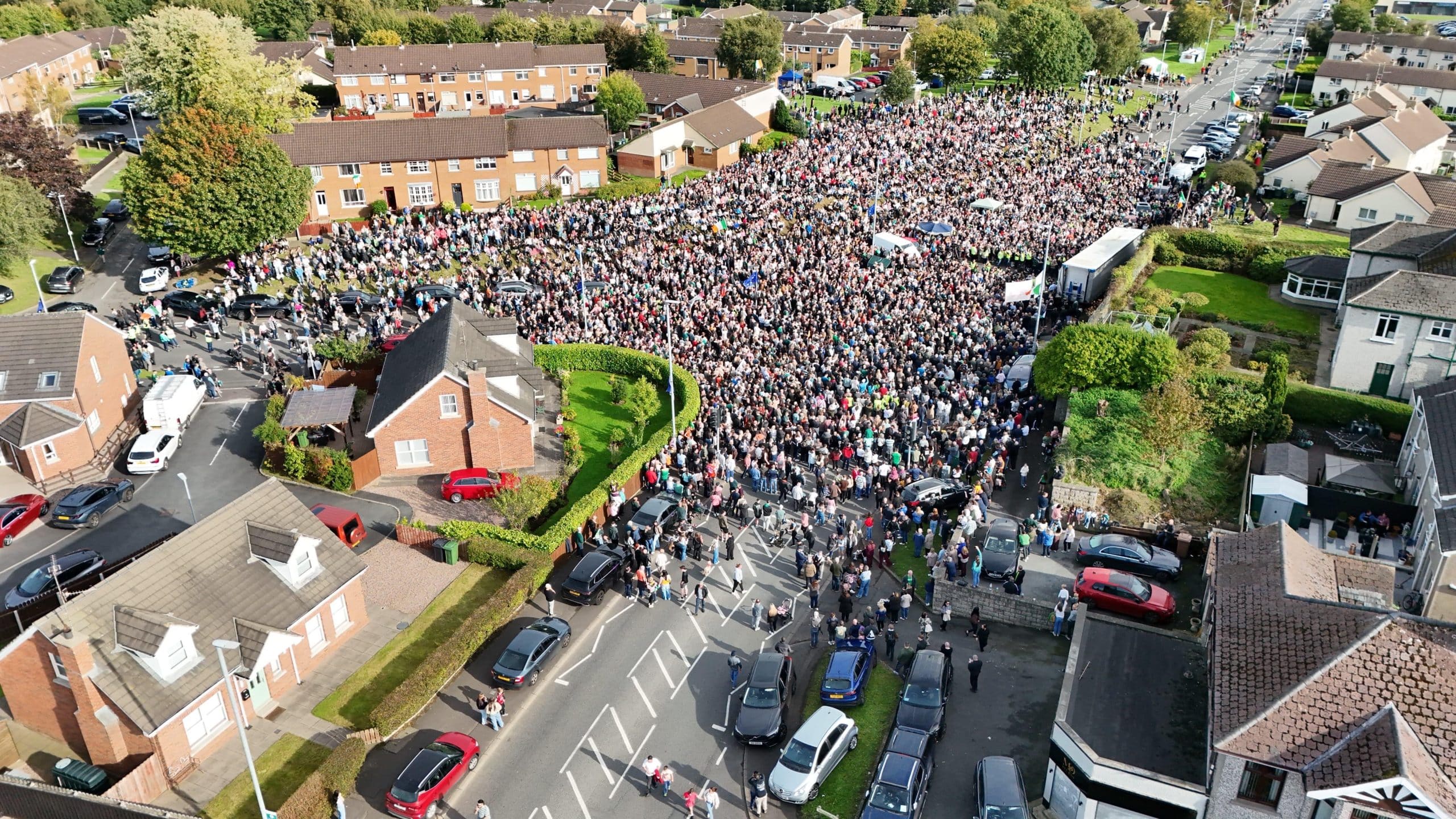
Residents of Garvaghy Road in Portadown, in the north of Ireland, have defeated a renewed attempt by the sectarian loyalist Orange Order to march through their nationalist community. Following 13 days of determined resistance, British Northern Ireland Secretary Chris Bryant intervened on 9 October to prohibit the parade, citing police warnings of serious disorder. The Orange Order has now launched a legal challenge. The outcome demonstrates the power of organised community resistance. PAUL MALLON reports.
The Orange Order is a Protestant, unionist and loyalist organisation founded in 1795, historically committed to defending Protestant supremacy and British rule in Ireland. Its annual parades, traditionally accompanied by marching bands, banners and orange regalia, celebrate this political and religious tradition. Marches through nationalist communities have long served as assertions of unionist domination, provoking resistance from residents who reject sectarian intimidation. The dispute over the march from Drumcree via Garvaghy Road is rooted in this history.
Drumcree: a history of sectarian intimidation
Between 1996 and 1999, 21 deaths were linked to the dispute over the Orange Order’s attempts to force its parade through nationalist Garvaghy Road. These included killings by loyalists and British forces. In July 1998, three children, Richard, Mark and Jason Quinn, were burned to death when loyalists petrol-bombed their Ballymoney home. In March 1999, loyalists murdered Rosemary Nelson, the solicitor representing Garvaghy Road residents, with a car bomb.
The Orange parade has been excluded from Garvaghy Road since 1998. The Order’s renewed attempt to force passage through a community still living with this history a political provocation.
After the quashing of an earlier prohibition over a procedural error, the Parades Commission authorised a restricted march of 35 Orangemen to take place on 27 September. Bands and supporters were prohibited, but removing the traditional trappings of an Orange parade did not remove its political meaning.
The power of community resistance
Residents and supporters assembled overnight on 26 September, physically preventing the parade from proceeding. Reinforcements arrived from Belfast, Dungannon and elsewhere. Republican organisations with longstanding political differences stood together, while anti-imperialist groups joined the mobilisation.
The determination and scale of the residents’ mobilisation prevented the Police Service of Northern Ireland (PSNI) from forcing the Orange Order parade through Garvaghy Road. Residents maintained their presence over the following days, refusing to surrender control of their streets. This determination ultimately compelled the British government to intervene, not out of benevolence to the nationalist community but in tacit recognition of its organised strength.
On 9 October, Bryant prohibited the parade, after the PSNI chief constable warned of serious risks of violence and wider disorder. The Orange Order immediately lodged a challenge to the decision in the High Court.
Solidarity and the struggle ahead
Solidarity has extended beyond Ireland. On 4 October, a Glasgow demonstration called by Cairde na hÉireann brought republican organisations and Fight Racism! Fight Imperialism! together. In London, the Cable Street anniversary march carried banners supporting Garvaghy Road. A solidarity broadcast in the United States on 26 September brought the residents’ case to an Irish-American audience.
A particularly moving message came from Rahaf, a 16-year-old Palestinian schoolgirl in Gaza, who sent her support for the residents’ right to peace and justice. Breandán Mac Cionnaith, spokesperson for the Garvaghy Road Residents’ Coalition, said her message brought him to tears. Amid the destruction surrounding her, she recognised another community’s struggle for safety and dignity. Her solidarity embodied the connection between the struggles of oppressed peoples.
The immediate victory at Garvaghy Road belongs to those who organised and sustained resistance. The Orange Order’s legal challenge means the dispute is not yet concluded, but the community has demonstrated what collective organisation can achieve.
For communists, the task is to strengthen this solidarity, defend the political independence of the working class and develop the anti-imperialist movement capable of carrying the struggle against British imperialism forward.