

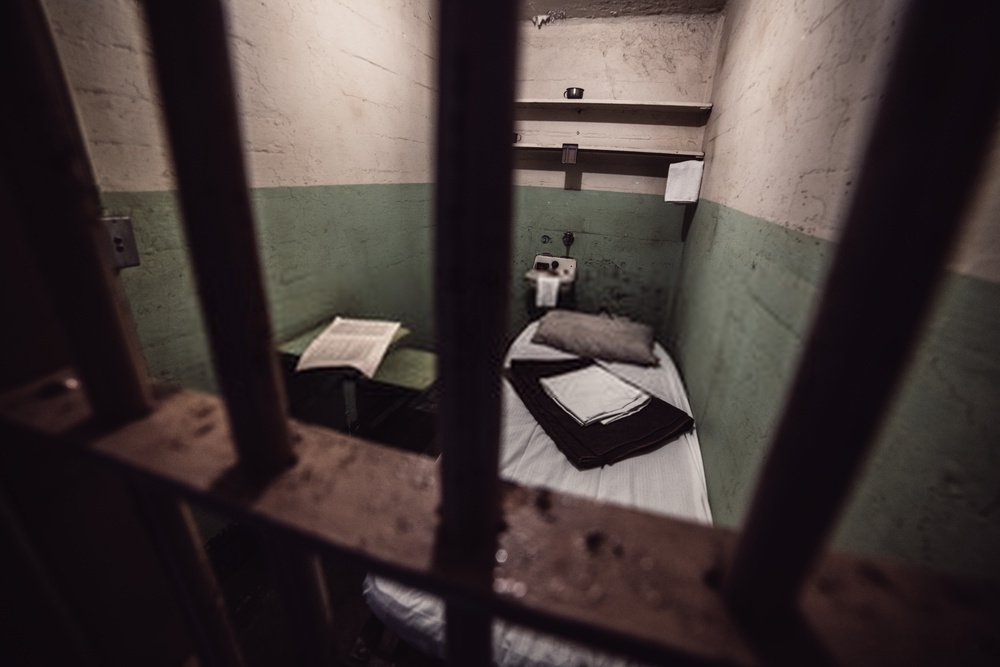
Solitary confinement is universally recognised as a form of psychological torture, and yet it is used systematically by the British prison system to mentally break those prisoners labelled a threat to the ‘good order and discipline’ of prisons. Many prisoners in Britain have spent years, even decades, in conditions of solitary confinement and sensory deprivation that are known to cause serious psychological damage, including psychosis, depression and self-harm. The UN considers that solitary confinement constitutes torture if imposed for more than 15 days. JOHN BOWDEN reports.
The British Supreme Court has ruled that the indefinite segregation of prisoners in punishment units is technically lawful, provided there is some kind of review process. However, burying prisoners in solitary confinement indefinitely and the inadequacy of the review processes continue to provoke some legal challenges.
In November 2025, the High Court ruled that the prolonged solitary confinement of prisoner Sahayb Abu amounted to cruel, inhuman and degrading treatment and that the impact was ‘so severe that this outweighed by some margin the rationale for that regime’, and as a result it violated both Articles 3 and 8 of the European Convention on Human Rights. The High Court ruled that Sahayb Abu’s suffering went ‘way beyond the inevitable element of suffering that is connected with segregation’.
In June 2024 prisoner Danny De Silva instigated a judicial review of his placement in solitary confinement within a Separation Centre (SC) unit. The court ruled in his favour in January 2025 and awarded him compensation. This and the payment of his legal costs were used by then Shadow Home Secretary Robert Jenrick to berate the Labour government.
Fighting the racist system
Kevan Thakrar is a prisoner who has consistently sought to publicly and legally challenge the prison system over his continuing confinement in segregation units and Close Supervision Centres (CSCs) over the past 15 years. Convicted in 2008 under the controversial joint enterprise doctrine and sentenced to life imprisonment, Kevan experienced racist abuse and violence at the hands of prison staff early in his imprisonment. At Woodhill prison he was beaten up by a gang of racist guards and began to develop post-traumatic stress disorder. Then in 2010 at Frankland prison, after he’d openly challenged the overt racism of the staff there, a gang of them entered his cell intending to beat him into silence, but this time he fought back. Kevan was prosecuted for assaulting three guards, but subsequently acquitted by the jury who’d heard evidence of his treatment in prison and the psychological damage it had inflicted on him. Despite his acquittal Kevan was then buried indefinitely in solitary conferment, under the guise of the CSC regime, where he remains. In 2021, Nils Melzer, then the UN Special Rapporteur on torture, raised Kevan’s case with the British government, saying that he was concerned that the prolonged and indefinite solitary confinement that Kevan was experiencing amounted to cruel, inhuman and degrading treatment, and even torture.
In 2023, Kevan began judicial review proceedings to challenge his treatment. After almost two years, the High Court rejected his legal action on the basis that his permanent location in conditions of total segregation was lawful. Kevan has now appealed and the Court of Appeal heard the case on 3-4 March 2026. No date has been set for the issuing of the appeal judgment.
For the prison system, Kevan’s legal skills (he has won a number of other legal actions against the prison authorities), combined with his high level of political consciousness, place him in the ‘most dangerous’ category and are used to justify his continued detention in CSCs and segregation units, in the most brutal and dehumanising conditions, including prolonged solitary confinement.
Super max security
There are obvious limits to the judiciary’s inclination and ability to significantly lessen the institutionalised brutality of the prison system, and in February this year, the Ministry of Justice (MOJ) announced its plans for the creation and enforcement of US-style ‘super maximum security’ regimes of total lockdown for the ‘most dangerous’ prisoners, and a tightening of the law to render SCs immune from legal challenge. The MOJ and Justice Secretary David Lammy claim that supermax regimes are needed ‘to address the growing complexity of radicalised individuals in custody’.
Separation Centres were created in 2017 to isolate what Lammy and the MOJ describe as the ‘most pernicious and influential extremist prisoners from the mainstream prison population where they could spread their dangerous ideologies and radicalise others’. The MOJ says that ‘The government is also acting to safeguard separation centre decisions from legal challenges, ensuring staff can focus on managing risk and protecting the public. This includes revising policy to make clear equivalence with the main regime is not required and establishing a new dedicated expert team responsible for drafting and analysing prisoner referrals to the units.’ So, effectively the so-called ‘rule of law’ will stop at the prison gate and those deemed the most unmanageable of prisoners will exist in a total legal vacuum devoid of judicial protection from the most dehumanising of regimes.
The reality is and always has been that only the solidarity and collective organisation of prisoners themselves can effectively shift the balance of institutional power in their favour and collectively empower them to defend their human rights. And an important component of that solidarity is the support and solidarity of revolutionary comrades outside prison. One struggle, one fight!