

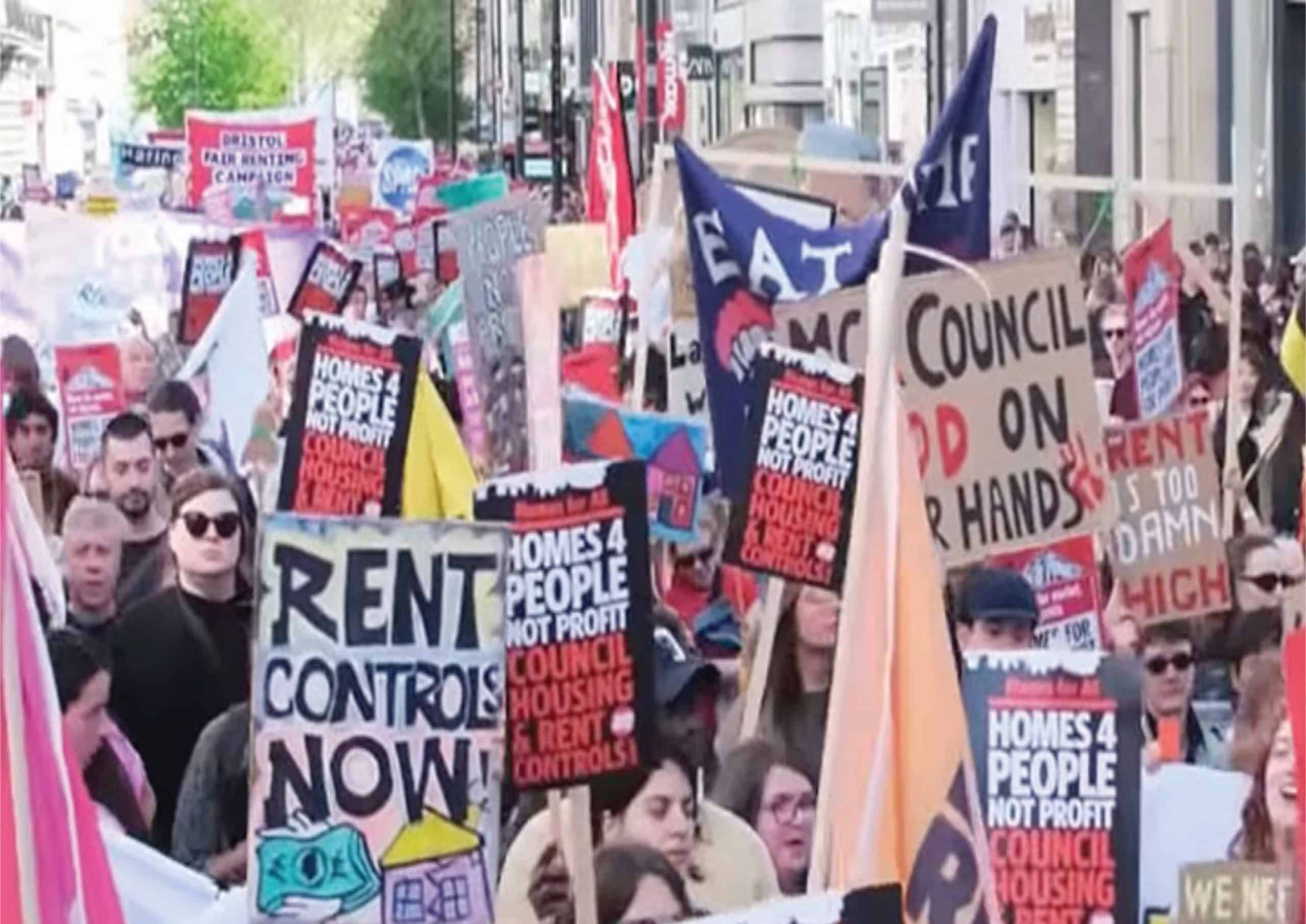
On 1 May 2026, the Renters’ Rights Act came into effect, abolishing the ability of landlords to evict tenants at whim. While its belated introduction does eliminate some of the most egregious practices of landlords in the private rented sector (PRS) – particularly the use of the pernicious Section 21, or ‘no fault evictions’ – its impact on renters, particularly the poorest, will be limited as long as the state fails to address the wider issues of affordability, availability and squalid housing conditions that are driving the spiralling housing crisis in Britain.
No more ‘no fault’ evictions – but landlords still hold all the cards
An end to ‘no fault evictions’ under Section 21 of the Housing Act 1988 has been a key demand of renters for years. Section 21 allowed landlords to evict tenants simply for daring to ask for repairs to their property, or challenging rent rises, or just because the landlord wanted to re-let at higher rent. More than 116,000 households have been threatened and 38,000 evicted by bailiffs under Section 21 provisions since the Conservative government of Theresa May first promised its repeal in 2019. The Labour Party failed abysmally to fulfil an election pledge to abolish it on taking power in July 2024: 11,400 households were evicted in Labour’s first year of government. Its repeal is long overdue, as is the outlawing of bidding wars, the limiting of rent rises to once a year and – on paper at least – the refusal to rent to households with children or on benefits. However, in a major concession to landlords, their legal powers to evict under Section 8 of the Housing Act – for rent arrears, ‘anti-social behaviour’, because they want to sell the property or to move themselves or a close member of their family in – have been strengthened. This is hardly surprising when 13% of all MPs are landlords; the 44 Labour landlords include both the prime minister and chancellor.
The racist elements of rental law have also been expanded. Landlords are already required to act as unofficial border guards, checking the immigration status of would-be tenants. Now they have additional powers to seek the eviction of an entire household with just two weeks’ notice if any tenant in the house does not have the correct visa. Labour’s racist immigration laws increasingly permeate every area of working class life.
Inevitably, in the run-up to the introduction of the Act on 1 May, there was a rush of Section 21 eviction notices (see box) as landlords prepared to hike up rents or sell off their properties ahead of what they see as greater restrictions on their ‘right’ to exploit tenants and generate profits.
No solution to the housing crisis under capitalism
Private rentals now make up 19% of all housing tenures. This includes both the poorest sections of the working class unable to gain access to the rapidly diminishing stock of social or even ‘affordable’ housing, and the petit bourgeoisie and better-off sections of the working class whose dreams of home ownership are at vanishing point. Rents in the private sector have risen exponentially over the last two decades, with households now paying on average 42% of their income on rent; in London the average is 52%. For those on benefits, the situation is particularly acute, with Local Housing Allowance frozen since 2020 at 2013 rates; more than half of all Universal Credit recipients face a significant shortfall, scraping money together each month to pay rent. While rent controls can only ever be a short-term and patchy response to this crisis of affordability, they are desperately needed – but have been categorically ruled out by the Labour Housing Secretary Steve Reed. Meanwhile homes in the private sector are more likely to be in ‘non-decent conditions’ – with Category 1 hazards that pose an immediate threat to health and safety – than any other housing tenure; in the worst and least regulated PRS homes landlords are likely now to cut back further on maintenance and repairs, with underfunded councils lacking the powers to enforce housing standards compliance. Awaab’s Law, brought in to enforce standards on mould and damp in social housing after the death of a toddler in Rochdale in 2020, has not been extended to the private sector.
The immediate response to the introduction of the Renters’ Rights Act has been an increasing number of private landlords selling up; they argue that rent controls would further erode their profits, and that the result will be even fewer homes for rent. This is inevitable when housing the working class is left to the private sector. Private landlords have no social responsibility: they are in the industry to turn a quick and easy buck; the moment that becomes a less attractive and lucrative option, they will invest their capital elsewhere. That is the logic of capitalism. Under this system, there will always be a housing crisis for the working class. It can only be resolved by enshrining decent, affordable housing as a human right and the building of publicly-owned homes on a mass scale. That is the solution offered by socialism.