

Cuba is facing the deepest economic crisis since the Special Period following the collapse of the Soviet Union in the 1990s. Shortages of fuel, food and essential goods, repeated blackouts and growing pressure on public services have created immense hardship for the Cuban people. This crisis did not emerge from the failures of the Cuban revolution; it is the direct result of nearly seven decades of the genocidal US blockade, economic warfare designed to make life unbearable and force Cuba into submission.
The blockade is a comprehensive system of economic strangulation aimed at preventing Cuba from accessing finance, investment, fuel, medicines and international trade. Since the 1960s, successive US governments have used sanctions as a weapon to undermine Cuba’s socialist construction, punish its sovereignty and force political change on the island.
The damage inflicted by the illegal blockade continues to escalate. Between March 2025 and February 2026, the economic losses caused by US sanctions reached an annual record of $8bn. This figure does not even account for the devastating impact of the near-total oil blockade imposed by the US in January. In a recent escalation, the Trump administration placed new sanctions on Cuba’s state oil company, CUPET, directly targeting the country’s ability to import, distribute and manage fuel supplies.
The consequences have been devastating. On 6 July, Cuba experienced its third nationwide blackout in six months. Power cuts have become a daily reality, with some areas experiencing outages lasting more than 30 hours, shutting down industry, disrupting transport and forcing schools and workplaces to close. These measures expose once again the true purpose of the blockade: to create the conditions of desperation that imperialism has long hoped will induce the Cuban people to abandon their revolution.
Among those targeted was the Ministry of Tourism (MINTUR), a key institution responsible for one of Cuba’s most important sources of foreign currency and employment. The assault on the sector has begun to undermine Cuba’s international partnerships. Spanish hotel group Meliá, one of the island’s longest-standing international tourism partners through joint ventures since the 1990s, announced it would withdraw from managing all of its 34 hotels in Cuba amid growing pressure created by US sanctions. By attacking tourism, the US is targeting Cuba’s ability to generate the resources needed to sustain its economy and maintain social programmes.
In early June, in another announcement, further sanctions were introduced targeting the Cuban Institute of Friendship with the Peoples (ICAP), founded by Fidel Castro in 1960 to build international solidarity with the revolution. By sanctioning organisations connected to Cuba’s international networks, the US is attempting not only to isolate the island economically but to intimidate the global movements and organisations that stand against imperialist aggression. The sanctions also targeted the Association of Combatants of the Cuban Revolution (ACRC), an organisation rooted in the revolutionary tradition of internationalism and the advance of anti-imperialist movements across the world.
This attack is significant because it targets one of the defining features of the Revolution: Cuba’s internationalism. While the US sends bombs to Iran and funds Israel’s genocide in Palestine, Cuba sends people to help with the recovery efforts in Venezuela and has sent doctors, teachers and fighters to support struggles for liberation. The US is not just attacking Cuban institutions; it is attacking the principle that another world is possible.
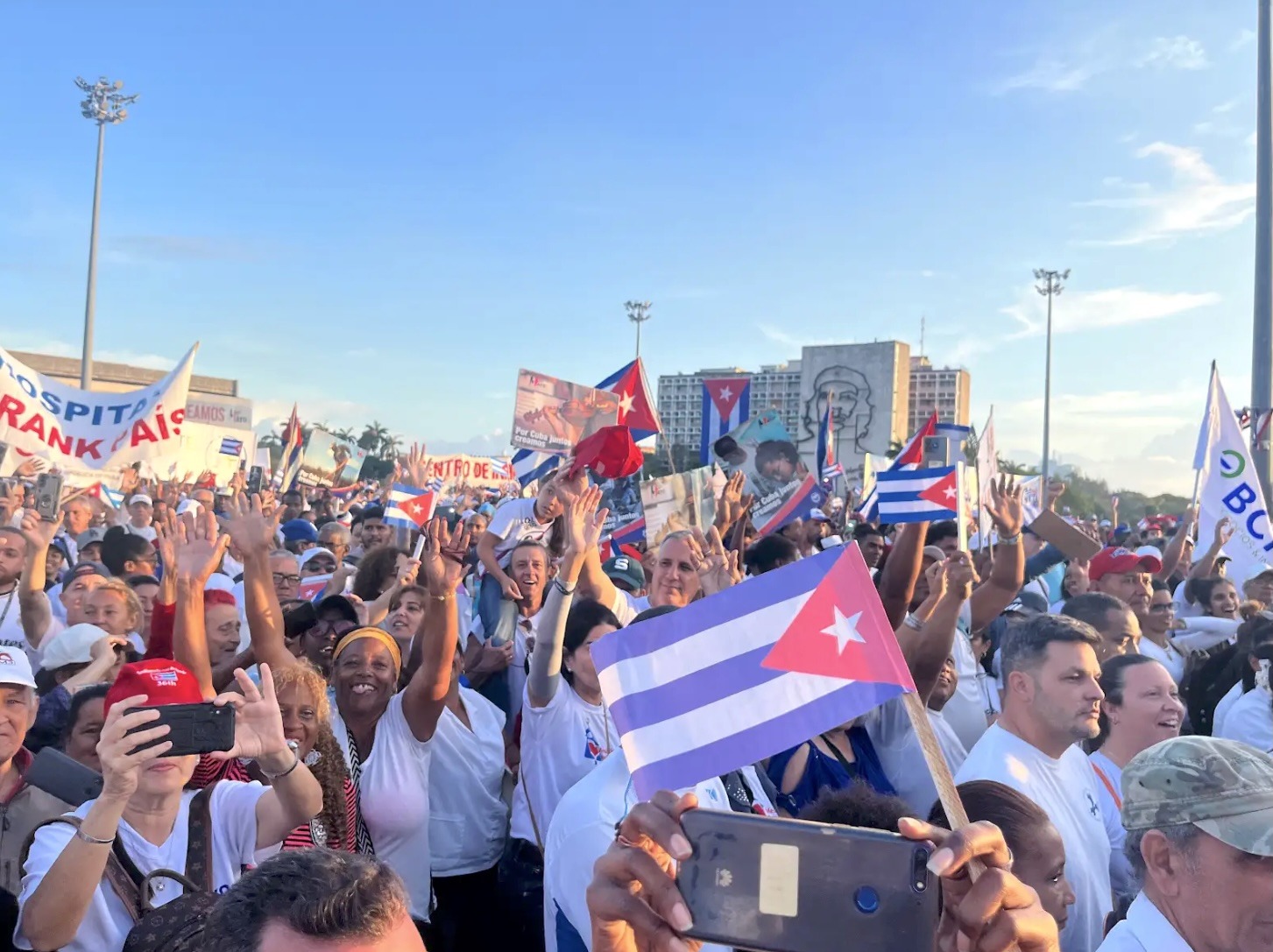
Yet Cuba continues to resist. The Cuban people are organising through their communities, workplaces and mass organisations to confront the challenges imposed upon them. The US hopes that hardship will break their commitment to socialism; instead, decades of blockade have exposed the brutality of imperialism and the determination of the Cuban people to defend their sovereignty.
The struggle for Cuba is a struggle against imperialism itself. After almost 70 years of blockade, the Cuban people need international solidarity more than ever. Our task is to build the movement to end the blockade, oppose imperialist aggression and defend the Cuban revolution.
Destinie Sánchez