

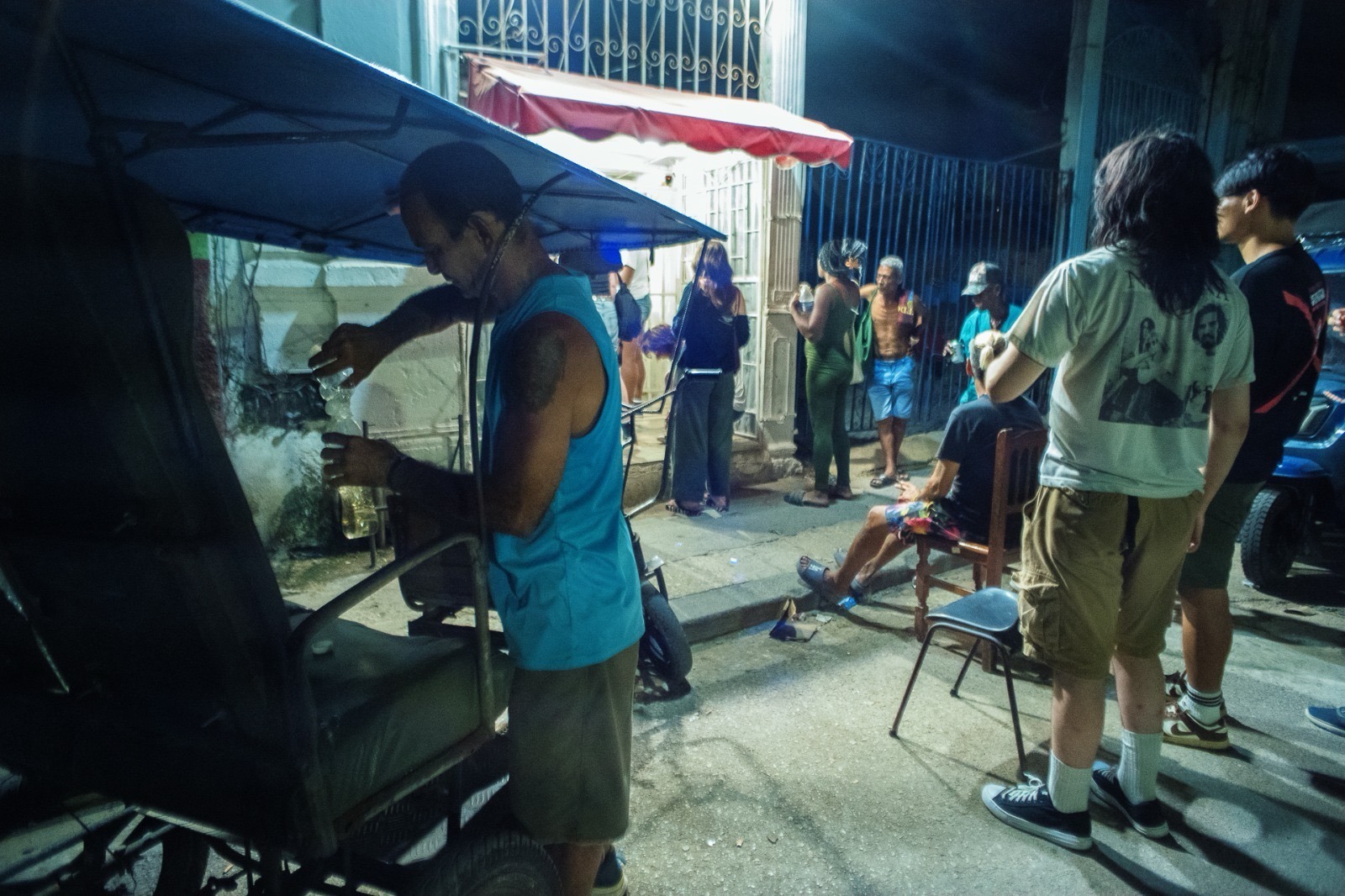
As soon as the brigade arrived in Havana on 2 August Cuba experienced the sixth collapse of the national grid this year, an unprecedented blackout frequency caused by the total US oil blockade.
State farm workers showed us how the blackouts impact irrigation, while an inability to import farming inputs and parts means manual work and oxen have replaced automation and tractors, forcing food production to drop by 60% between January and June. The energy blockade affects every link in the chain of food security: unprocessed tomatoes rot, staples like plantain and garlic cannot be transported, and sugar cane harvests have plummeted. The Ministry of Agriculture’s winter planting targets of 517,000 hectares for potatoes, cassava and other vital crops have been shattered.
May’s US Executive Order 14404 expands sanctions against Cuba’s energy, defence and mining sectors while the state-owned Unión Cuba-Petróleo was sanctioned in June. Oil imports ordinarily make up 60% of Cuba’s supply, and domestic production is deprived of energy for extraction and faces heavy crude processing issues.
However, as Cuban energy researcher Laura Beatriz explained to us, the government’s efforts in creating 49 new solar parks since 2025 have prevented permanent blackouts, adding 1 gigawatt of capacity – one of the fastest ever solar revolutions in a low-to-middle income nation.
Farm workers explained how state-led initiatives, such as the usufruct land rights offered by Decree 358, have brought over 300,000 Cubans back to countryside farming. The state also maps empty city plots for cultivation under the Organopónicos initiative, which now supplies the majority of Havana’s vegetables.
Reforms protect social protections by incentivising private investment in renewable setups for hospitals. In Havana, tricycles replace grounded garbage trucks, reflecting a wider easing of permits to mitigate public transport paralysis.
But renewables, at 10% of energy mix, cannot yet meet daily deficits of 1,955 megawatts. The blockade restricts lithium storage purchases, so the grid reverts to oil-fired thermal plants after sunset, of which just 34% installed capacity is available, less than in 1994, because of maintenance parts restrictions.
Under siege, Cuba adapts. But the US blockade’s ‘silent genocide’ is now louder than ever. Our steadfast solidarity with socialist Cuba must be even louder! ¡Abajo el bloqueo!