

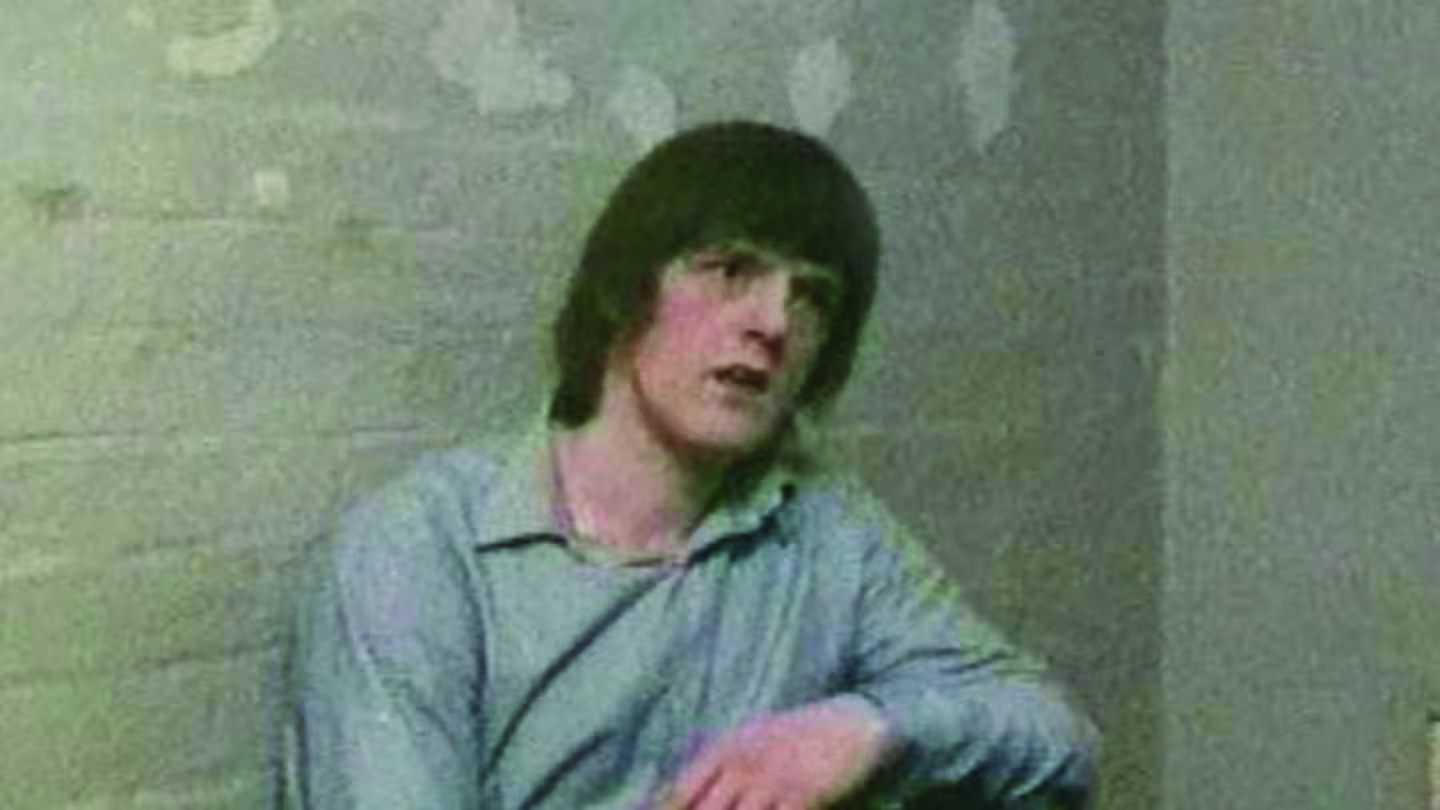
An indicator of the real nature of the prison system is how it treats its most ‘difficult and unmanageable’ prisoners. The treatment of Robert Maudsley, who has now spent almost 50 years in total solitary confinement, most of it inside an underground cage-like cell in Wakefield prison, reveals the savage cruelty of the British prison system. Former long-term prisoner JOHN BOWDEN writes.
As a child, Bob suffered horrendous sexual abuse and cruelty at the hands of his father, that he says left him deeply mentally scarred, and spent most of his childhood in orphanages. In 1974 he killed a paedophile who had shown him pictures of children he had sexually abused. After handing himself in to the police and saying he needed psychiatric help, Bob was sent to Broadmoor high security hospital which at the time was staffed by prison officers who enforced a regime of physical brutality and forced tranquillisation of inmates. Inevitably Bob’s state of mind worsened and while in Broadmoor he killed someone held there for sexually abusing children.
Bob was then given a life sentence and moved into Wakefield maximum security prison where he was placed on a wing populated mostly with serious sex offenders; his state of mind worsened and he killed two prisoners. He was subsequently sentenced to a whole life term which means he will never be released. In the early 1980s he was placed in a two-cell unit in the basement at Wakefield prison where he was held in total isolation and allowed no contact with anyone apart from the gang of guards ‘supervising’ him. For almost 40 years he was buried alive in this steel coffin. Yet his struggle for psychological survival motivated him to refocus his anger and rage on the system and not other prisoners, and that is the true reason why he remains buried so deeply in solitary confinement.
In 1985, following a protest at Parkhurst prison, I was consigned to the underground cell alongside Bob’s and was able to verbally communicate with him, as well as with prisoners in the segregation unit above us. Over weeks we were able to create a mood of solidarity that manifested itself in noise protests and a total refusal to comply with the regime in the segregation unit. Finally, guards in riot gear stormed Bob and my cells to remove us to ‘strong-box’ punishment cells. Bob physically resisted with fearless courage. Most of the prisoners in the segregation unit, including me, were then transferred out of Wakefield but unfortunately not Bob, who remained there for decades afterwards. This inhumane treatment was backed up by the right-wing media which smeared Bob as ‘Britain’s most dangerous prisoner’.
In April 2025, following a hunger strike, Bob was moved to a Close Supervision Centre (CSC) unit at Whitemoor prison. For the first six months there he was speaking to members of prison staff employed in the CSC and even teaching them to play chess. Then, in October 2025, following an incident in which prison guards were attacked in the Separation Centre at HMP Frankland and various subsequent prisoner-on-prisoner attacks, the CSC system introduced a new ‘protocol’ for prisoners like Bob, who were on restricted association.
This new protocol involved a process whereby before his cell door was unlocked for any reason, he had to put his toothbrush, nail clippers, pens and any other ‘potential weapon’ into a plastic tube and screw it shut. As well as physically difficult to accomplish due to disabilities in his hands, Bob found this humiliating and degrading and refused to comply with it or to engage further with the prison staff.
As a result, all the meagre ‘privileges’ he had been accorded were taken away from him and Bob was denied any contact with the small group of prisoners within the CSC. The same staff members with whom he had previously had a reasonably relaxed relationship then submitted reports claiming he was hostile and disrespectful, which was of course then used to justify his continued isolation.
On 14 May 2026 Bob began a hunger strike, demanding that he be allowed to associate with other CSC prisoners, be allowed access to basic recreational facilities and have his exercise periods on the CSC yard, instead of the even more isolated segregation unit yard, from where he could not even communicate with other prisoners in adjacent cells through the window.
On 17 June another prisoner let us know that Bob’s protest had been partially successful and that he was now able to use the main exercise facility. This was despite his having not conceded anything in relation to the protocol or the demand that he ‘engage’ with prison staff. In a part of the prison system as tightly controlled as the CSC, the loss of any entitlement is a major issue, and its return following protest a significant victory for prisoners’ ability to stay resilient in the face of the ever pressing demand by the system to lick the boots that kick us.