

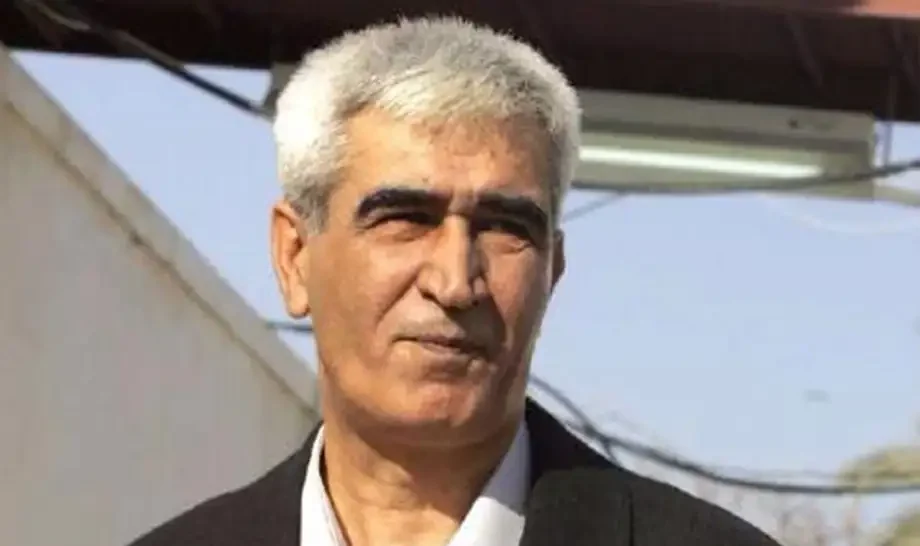
In the isolation cells, between the Ramon and Megiddo prisons of the Zionist occupation, Ahmad Sa’adat, general secretary of the Popular Front for the Liberation of Palestine (PFLP), spends his days away from the eyes of his family and lawyers most of the time. His case is no longer just that of a political prisoner; it has become a test of the silence of the international community and solidarity movements with Palestine regarding what the PFLP, human rights organisations and prisoner affairs monitors describe as a systematic policy of slow execution, medical negligence and collective punishment. Sa’adat’s treatment is symbolic of thousands of Palestinian prisoners in the occupation’s prisons. ABU KANAAN writes from Gaza.
Comrade Sa’adat has led the PFLP, the largest Palestinian leftist faction, since 2001, succeeding martyred leader Abu Ali Mustafa, who was assassinated by Israel in the same year. Sa’adat was captured by Zionist forces in 2006, following his 2002 imprisonment by Palestinian Authority forces – with British Labour government collusion. He is serving a 30-year prison sentence on charges of involvement in an operation carried out by the Front that targeted the racist and fascist Zionist tourism minister Rehavam Ze’evi in 2001. Today, as comrade Sa’adat has reached 73 years of age, fears are mounting regarding his health and humanitarian situation in light of detention conditions described by sources close to him as worsening day by day.
Reality of detention: isolation, deprivation and abuse
Comrade Sa’adat’s detention conditions include his repeated transfer between solitary confinement in Ramon and Megiddo prisons, in a punitive pattern that denies him any stability or regular medical follow-up. Family visits are almost non-existent; his family has not been able to visit him since before October 2023. He has been subjected more than once to beatings and physical assault during his transfers between detention sites, where his hands were cuffed and his eyes blindfolded, and he was left for long hours before being abused.
Sa’adat suffers, like the majority of prisoners, from a severe shortage of food, a scarcity of clothing and heavy blankets during the winter, and a lack of water in the summer. He has lost a significant amount of weight, an indicator that raises concern given his advanced age and his suffering from several illnesses, without receiving the necessary treatment or medical follow-up. Handala prison campaign and other organisations monitoring Sa’adat’s file link this deterioration to a repressive campaign described as systematic, led by fascist minister Itamar Ben-Gvir, as part of a general policy toward prisoners that has sharply escalated after 7 October 2023.
‘Slow execution’: from Walid Daqqa to Gaza detainees
The tragedy of medical negligence does not stop at Sa’adat. PFLP leader and prisoner Walid Daqqa was martyred in captivity as a result of the policy of medical negligence, and his body remains detained by the occupation, like the bodies of dozens of other prisoners who were killed directly or slowly behind bars. The PFLP describes the conditions to which prisoners are subjected – ranging from deliberate medical negligence to the deprivation of the most basic necessities of a decent life – as a systematic ‘slow execution.’ This policy is no less dangerous than the direct killings and deaths that have seen increased documentation inside prisons since the outbreak of the war on Gaza.
This systematic targeting extends to numerous prominent Palestinian leaders and symbols currently held in captivity, who face severe physical abuse, isolation and medical neglect. Those subjected to these brutal conditions include:
- PFLP leaders and cadres such as Ahed Abu Ghulmeh, Walid Hanatsheh and Samer Arbid, all of whom have endured prolonged cycles of interrogation, medical neglect and harsh confinement.
- National leaders and symbols Marwan Barghouti, Hassan Salameh and Abdullah Barghouti, who remain primary targets of punitive measures and isolation policies.
- Medical professionals including Dr Hussam Abu Safiya from Gaza, along with dozens of other Palestinian leaders, intellectuals and symbols of the resistance.
The continued detention of these leaders, coupled with the state-sanctioned medical negligence and the withholding of the bodies of Daqqa and other deceased prisoners highlights a systemic approach aimed at breaking the morale and physical health of the Palestinian leadership behind bars.
In this context, multiple reports have spoken of grave violations against Gaza detainees at the Sde Teiman facility, including systematic killing and severe physical assault, among them an incident of sexual assault against a prisoner that led to him sustaining serious injuries, while Israeli judicial proceedings ended in the acquittal of those accused. Organisations and those monitoring the prisoner file consider that this path reflects the lack of any legitimacy for the occupation’s courts in achieving justice, and that they are a tool of the same repressive system, not a neutral party in it.
More than 9,600 prisoners
The number of detainees in the occupation’s prisons has increased by 83% since the outbreak of the war on the Gaza Strip in October 2023, to exceed 9,600 prisoners, compared to about 5,250 prisoners before the war. Among them are 86 female prisoners and around 350 children. The number of administrative detainees, held without charge or trial, has also risen to 3,532, an unprecedented level. Data indicates that the majority of these are previously released prisoners, in addition to students, journalists, lawyers, academics, parliamentarians and activists.
More than 100 prisoners have been martyred since the beginning of the war, with only 89 of their identities announced and the fate of others, especially Gaza detainees, remaining unknown, in light of what these campaigners describe as ‘enforced disappearance.’ In the occupied West Bank, the same organisations have documented more than 25,000 cases of arrest since October 2023, including some 1,800 children, more than 700 women and more than 240 journalists. 118 prisoners are serving life sentences while eight have remained in detention since before the signing of the Oslo Accords in 1993.
At least 326 prisoners have been martyred inside Israeli prisons since 1967, while the Zionist state continues to hold the bodies of 97 prisoners killed behind bars, amidst continuous Palestinian demands for their release.
Break the silence: the demand on all solidarity campaigns
The question for Palestinian and international solidarity movements is: why is there silence regarding the policies of systematic medical negligence, administrative detention without trial, the detention of children, cases of direct killing inside prisons and the hiding of the fate of dozens of detainees from Gaza for more than two and a half years, which constitute violations that rise to the level of war crimes or crimes against humanity under international humanitarian law?
In light of the above, we call upon all pro-Palestine voices to demand solidarity with Ahmad Sa’adat and all Palestinian prisoners. A good starting point must be:
- Break the media and political silence imposed on the file of the comrade leader Ahmad Sa’adat specifically, through media and awareness campaigns that highlight his health and humanitarian situation.
- Demand immediate permission for Sa’adat’s family to visit him and ensure his regular communication with his lawyers and relatives.
- Pressure for urgent and independent medical care for him and sick prisoners in general, including allowing independent doctors to examine them.
- End the policy of administrative detention that affects thousands of Palestinians without charge or trial and release detained children and women.
- Open an independent and transparent international investigation into the martyrdom of dozens of prisoners inside prisons since October 2023, and into the fate of the missing Gaza detainees.
- Demand the release of the bodies of deceased prisoners held by the occupation authorities, including the comrade leader Walid Daqqa, and ensure their handover to their relatives to bid them farewell with dignity.
- Demand international accountability mechanisms, through UN and legal bodies, to examine the documented violations in detention facilities, including the Sde Teiman file.
This means organising in-person and digital solidarity events, sit-ins, statements and social media campaigns that keep the issue of Sa’adat and Palestinian political prisoners on the international agenda, instead of being folded away in light of the escalation of events in the region. The case of comrade Saadat, with all the political and humanitarian symbolism it carries, cannot be isolated from the case of thousands of Palestinian prisoners who are facing deteriorating detention conditions amidst a continuous war on the Gaza Strip. International silence remains the most dangerous sentence imposed upon the 73-year-old detainee and for the fate of thousands of others.