

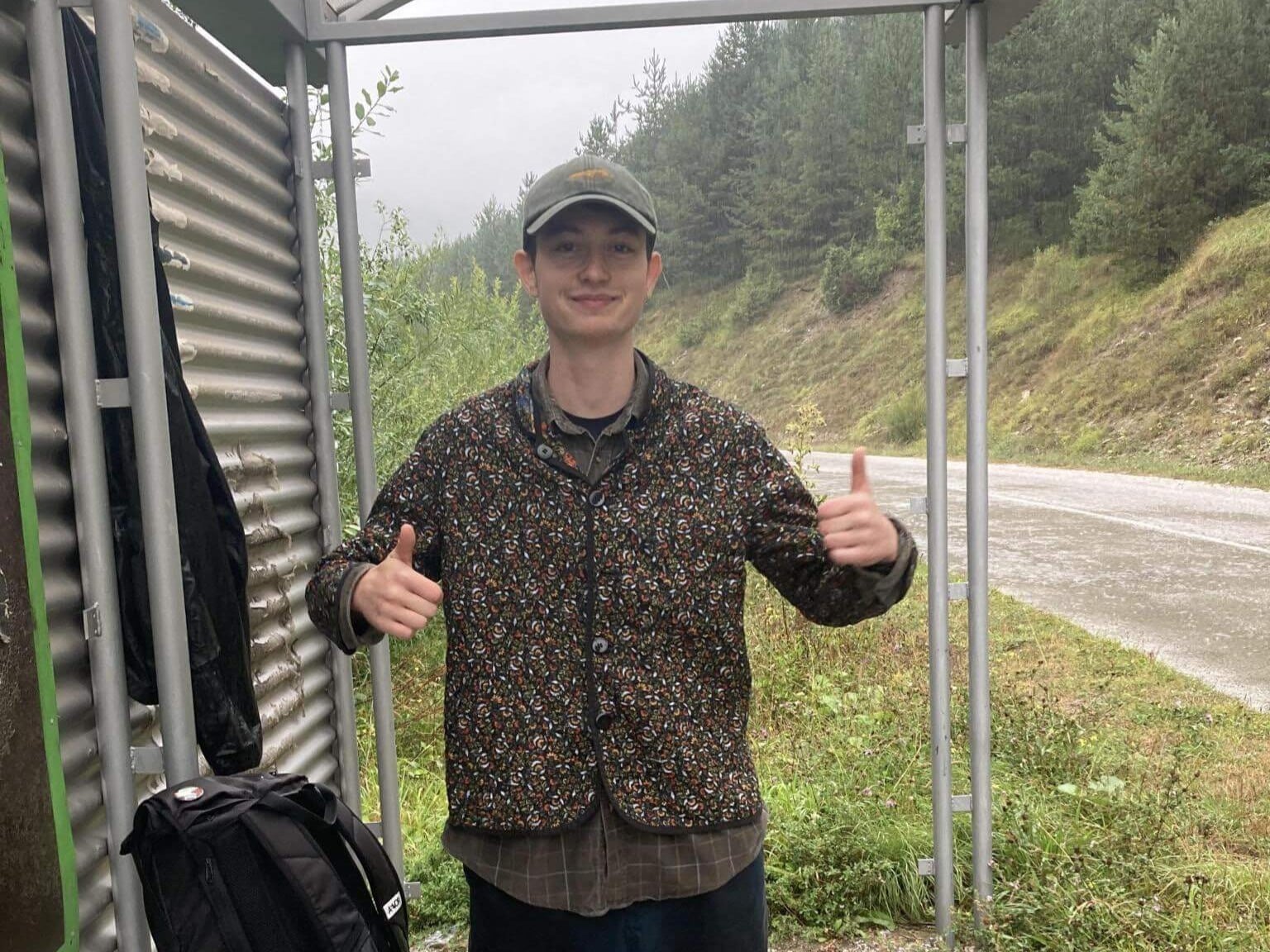
Continuing our series of writings by imprisoned Palestine solidarity activists, JON CINK of the BRIZE NORTON 6 writes for FRFI from HMP Foston Hall.
In prison many conversations start by asking the other person what they are inside for and how long they are doing. I am imprisoned for an alleged connection to a pro-Palestine action which saw two people enter RAF Brize Norton and spray military aircraft with red paint in protest at the RAF’s complicity in the genocide of Palestinians, and imperial violence throughout western Asia.
I am happy to answer other prisoners’ questions. I tell them that me and my co-defendants will have done 18 months on remand by the time our case gets to trial, which is three times the legal limit on detention of unconvicted prisoners. Their reaction usually ranges from outrage to confusion. Even within a dysfunctional so-called justice system full of delays, waiting and adjourned hearings, 18 months is a long time. On a handful of occasions, however, comments that it’s actually ‘not so bad’ were uttered, suggesting that at least I know I am safe for the time being and the months spent on remand will come off my sentence anyway. This left me feeling quite uncomfortable. I am not guilty of the accusations against me, I don’t want to be in prison and prolonged remand defies a cornerstone of English law, the right to be treated as innocent until proven guilty.
I sat with those uncomfortable feelings for a while before realising what those rather confusing sentiments reflect. Now it’s clear to me that they have little to do with conscious normalisation of political repression, let alone of my own imprisonment. It’s the prison itself which has become normalised in some prisoners’ lives, imposing itself as a permanent object in their survival toolbox.
Prison is a tough place. Having one’s autonomy taken away wears on everybody. Someone else chooses what you wear, what you eat, where you are allowed to be and ultimately who you are allowed to be. The prison permeates all aspects of physical and psychological being. Sometimes without us even noticing. It is not an environment most would choose to be in voluntarily. Why then do a significant proportion of the current population, come back again and again? What does this tell us about the support structures within our society?
A friend of mine was recently released. When we spoke for the last time before her release, she was not very enthusiastic about the prospect of leaving the predictability of prison life. Definitely not in the way I know I would have been. She had got herself inside in the middle of winter, after things got bad and she could not afford rehab. Prison was the only place where she could detox in relative safety, as she didn’t have stable housing. After two months here, she looked much healthier and was determined to stay off all drugs and alcohol. However, staying clean outside would be a challenge. The probation service pinned her to shared accommodation for the remainder of her licence period, where addictive substances are easy to come by. So, she would have a choice – risk falling back into addiction or deliberately get recalled to prison.
I have been around women who say that prison kept their abusers away from them for the first time in years. Once, a chaplain leading a Sunday service suggested that prison might have saved us from death on the streets during a particularly cold winter. Another time, a prisoner shared their joy at writing a letter to their mum for the first time ever, after getting help in prison with improving their reading and writing. Why are adults only able to access literacy classes in prison? Same goes for other education, religious lessons, courses or workshops. And on a larger scale, why is prison one of the very few places, if not the only one, where the state provides three meals a day (hardly ever adequate but still), heat during winter and free hygiene products? Why do some have to trade freedom for a roof over their head?
Notwithstanding the individual experiences of imprisonment, care and carcerality can’t co-exist on a systemic level. The logic that the same institution can both punish and protect is fundamentally flawed. The concept of a prison is dependent on a skewed distribution of power, the jailer always having almost total control over the jailed. Despite this, the prison, especially a women’s prison, claims to be able to provide support to vulnerable people with an ultimate aim of rehabilitation. There is an underlying assumption that everyone needs help to get on a ‘right track’ and therefore some opportunities not easily accessible on the outside are offered to prisoners. In other words, the penal system abuses the complete failure of support services within community settings to assert its own necessity.
A society that relies on prison to temporarily hide issues caused by wealth inequality and crumbling social services is failing many people. Carceral logic traps them in a never-ending cycle of imprisonment. The alternative doesn’t lie in better prison conditions, more and better activities or more well-meaning organisations within prisons. Those things are useful, however without safe housing, access to healthcare and mental health services in the community (ones that don’t see the prison as their ally), without building strong communities and finding a common purpose in a struggle for real justice, the cycle of incarceration continues. Every roof over someone’s head, every community space, or even just a friendship constitutes a tiny hole in the walls which the system puts up to isolate us prisoners from the rest of society.
On 1 May four of the Brize Norton defendants were once again refused bail by the Central Criminal Court. Having been arrested in 2025 shortly before the Terrorism Act proscription of Palestine Action, they are due to be tried in 2027. The fifth defendant, Umer Khalid, who has increasingly life-threatening health problems, had already been refused compassionate bail a week earlier. On 15 May a sixth person Lara Downes was charged in relation to the Brize Norton action and remanded to HMP Bronzefield.